Ancient Origins and Ingredients
- Marshmallows originated around 2000 BCE in Egypt, where sap from the mallow plant was combined with honey and nuts.
- The mallow plant, Althaea officinalis, thrived in marshy European, Asian, and North African regions.
- Marshmallow was initially a medicinal remedy for coughs and skin ailments.
Development in France
- In the 1800s, French confectioners hand-whipped mallow root sap into a soft confection.
- The starch mogul system was utilized to mold confections, allowing for greater production.
- Gelatin eventually replaced mallow root, creating the stable form of modern marshmallow.
Industrial Revolution Impact
- In 1948, Alex Doumak revolutionized marshmallow production with an extrusion process.
- This new process involves running ingredients through tubes to be cut and packaged.
- The extrusion process enabled marshmallows to be mass-produced and became a popular candy in the 20th century.
Modern Consumption and Popularity
-
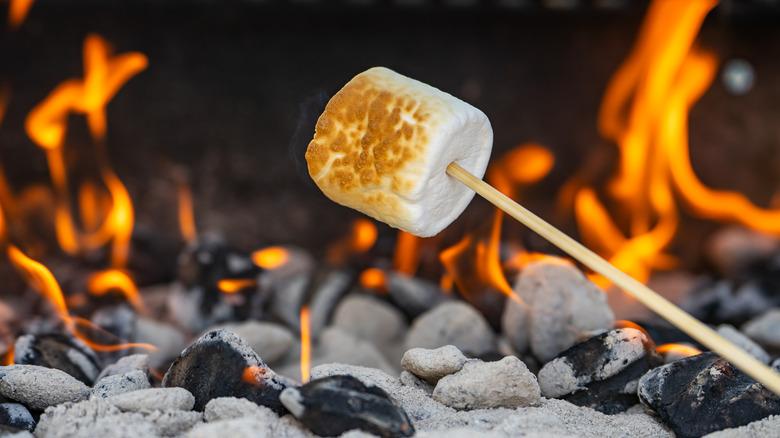
The promotion of marshmallows in Girl Scout publications during the 1920s marked a significant turning point in their cultural significance in America. By introducing marshmallows as an ideal addition to campfire treats like hot chocolate and s’mores, the Girl Scouts effectively popularized the sweet treat as a staple of outdoor and social activities. This modern marshmallow, derived from gelatin rather than marshmallow root, was valued for its resilience—it could float atop hot beverages without disintegrating. The Girl Scout endorsement intertwined marshmallows with moments of community, leisure, and American traditions, cementing their place in culinary history.
- Today, marshmallows are enjoyed globally and used widely in treats such as s’mores and breakfast cereals.
♠
Found a bug? Have some other thoughts on this tool? Let me know here →