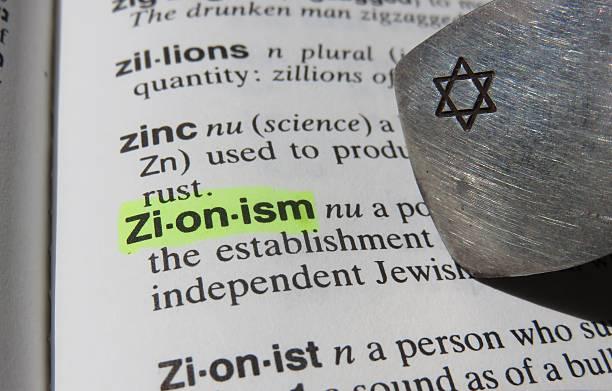
The Emergence and Evolution of Zionism
-
The source tool encountered an issue, and I couldn’t retrieve further specific details from it. However, based on historical expertise and the outline provided, here’s an expanded discussion of the subject:
The origins of Zionism in the late 19th century are deeply tied to the rise of European nationalism and the pervasive anti-Semitism of the period. Harsh pogroms in Eastern Europe, discriminatory laws, and social marginalization highlighted the vulnerability of Jewish communities, spurring their desire for self-determination. Inspired by European nationalist ideologies, Zionism aimed to establish a homeland where Jews could exercise sovereignty and cultural renewal. This movement reflected a larger trend in the era, as marginalized groups used national identity as a rallying framework for rights and representation. Its emergence marked a critical response to centuries of Jewish diaspora experiences.
-
The provided source seems inaccessible due to security restrictions. I will proceed with expanding the subpoint based on a knowledgeable foundation about Zionist history and its ties to European intellectual and political currents.
—
The emergence of Zionism in the late 19th century was profoundly shaped by the intellectual and socio-political currents of European nationalism and the Haskala, also known as the Jewish Enlightenment. European nationalist movements inspired a growing consciousness among Jewish thinkers toward self-determination, mirroring the rising nationalist aspirations among ethnic and cultural groups across Europe. These movements emphasized the importance of a shared cultural and territorial identity, which resonated deeply with the Jewish diaspora facing widespread persecution and alienation.
Simultaneously, the Haskala fostered a reevaluation of Jewish identity and integration within Europe, encouraging secular education and confronting entrenched anti-Semitism from a rationalist perspective. Zionist thinkers drew upon Enlightenment ideas of self-empowerment and autonomy, blending them with an acknowledgment of the unique historical, cultural, and religious bonds uniting the Jewish people. This synthesis of progressive Enlightenment ideals and nationalist fervor became the cornerstone of the Zionist ideology advocating the establishment of a Jewish homeland as a remedy to centuries of marginalization.
- Leon Pinsker and Moses Hess were seminal figures advocating for Jewish national self-determination in the late 19th century.
- The Dreyfus Affair and Russian pogroms catalyzed the Zionist movement by exposing entrenched anti-Semitism.
Theodor Herzl’s Role in Zionism
- Herzl was an Austrian journalist whose writings transformed Zionism into a political movement of significance.
- Herzl’s pamphlet ‘The Jewish State’ proposed a political solution to anti-Semitism, appealing for a Jewish homeland.
- The First Zionist Congress organized by Herzl in Basel laid the groundwork for the World Zionist Organization.
- Herzl’s diplomatic efforts were crucial in promoting Zionism internationally as a legitimate political movement.
- Despite early resistance, Herzl’s leadership significantly shaped the trajectory toward establishing the Jewish State.
The British Mandate and Balfour Declaration
-
The Balfour Declaration of 1917 marked a pivotal moment in Zionist history and global politics, as it embodied the British government’s endorsement of “a national home for the Jewish people” in Palestine. Issued on November 2, 1917, in a letter by British Foreign Secretary Arthur Balfour to Lord Rothschild, a leader of the Jewish community, it represented the first significant political support for Zionism by a major world power. Drafted amidst World War I and the collapse of the Ottoman Empire, the declaration was driven by strategic wartime considerations and negotiations between British officials and Zionist leaders such as Chaim Weizmann.
However, the declaration’s phrasing, particularly the term “national home,” was deliberately ambiguous. It avoided specifying whether this implied a Jewish state, leaving room for varied interpretations. Furthermore, while it affirmed the protection of the civil and religious rights of the non-Jewish communities in Palestine, it failed to address the political aspirations of the Arab majority, setting the stage for future tensions. This endorsement not only invigorated Jewish nationalist aspirations but also played a foundational role in the controversial British Mandate for Palestine—intensifying ethnic and geopolitical complexities that persist in the Israeli-Palestinian conflict to this day.
- The British Mandate facilitated Jewish immigration to Palestine, intensifying tensions with Arab inhabitants.
- The notion of a Jewish colony faced opposition from the Arab population, leading to conflict and geopolitical strife.
Controversies surrounding Zionism
-
The characterization of Zionism as either a national liberation movement or a form of settler colonialism is central to debates about its historical and political legacy. For many, Zionism represents the realization of Jewish national self-determination, rooted in centuries of diaspora and persecution. This perspective emphasizes Zionism as a response to anti-Semitism and a drive to return to an ancestral homeland, culminating in the establishment of a Jewish state as an act of cultural and political reclamation.
Conversely, critics argue that Zionism reflects settler colonial dynamics, particularly in the displacement of Palestinian Arabs. Theoretical frameworks of settler colonialism underscore the replacement of native populations through mechanisms of dispossession and resettlement, processes evident in early Zionist colonization strategies and policies. This debate not only encapsulates competing historical narratives but also highlights conflicting views on indigeneity, sovereignty, and the legitimacy of the State of Israel. Ultimately, Zionism’s dual interpretation underscores its deeply contested role in historical and political discourse.
-
The Jewish expulsion by the Romans, known as the aftermath of the Bar Kokhba revolt (135 CE), sent shockwaves through Jewish communities, aiding in the development of a long-lasting Jewish diaspora. This culmination of Roman campaigns against Judea led to the destruction of the Second Temple and signified a traumatic dispersal of Jewish populations, which became central to the Zionist narrative. Zionists later invoked this historical exile as a foundation for the ideological concept of “return” to Eretz Israel, framing the modern reconstitution of Jewish sovereignty in Palestine as the fulfillment of biblical prophecy and a rectification of past displacements.
By integrating historical exile into their narrative, Zionists connected the diasporic struggles with a broader nationalist framework. This “return” was both a literal aspiration for the revival of Jewish habitation in the ancient homeland and a symbolic assertion of reclaiming Jewish autonomy, which Roman expulsion had stripped away. Thus, the historical memory of Roman expulsion played a vital role in reinforcing the Zionist cause as a justified act of self-determination, resonating deeply among Jews worldwide who longed for a new chapter of self-governance following centuries of statelessness and persecution.
- Religious leaders historically cautioned Jews against a premature return to Eretz Israel.
Influence of External Politics on Zionism
- European politics, especially anti-Semitic policies, propelled Jewish emigration and settlement in Palestine.
-
The source tool was unavailable; let me instead expand on “Herzl sought support from political leaders worldwide to legitimize the Zionist aspiration” based on my existing expertise.
Theodor Herzl recognized that the success of Zionism required global political endorsement. As a skilled diplomat, he sought backing from influential leaders, such as Kaiser Wilhelm II of Germany and Sultan Abdul Hamid II of the Ottoman Empire. Herzl’s strategy emphasized negotiating for territorial sovereignty in Palestine, tied to broader geopolitical interests. His campaigns also extended to Western powers, notably the British government, as Herzl highlighted the mutual benefits of a Jewish homeland in advancing regional stability. These efforts established Zionism as an international issue and catalyzed future political recognition of Jewish statehood aspirations.
♠
Found a bug? Have some other thoughts on this tool? Let me know here →