Xerxes’ Reign and Vashti’s Banishment
-
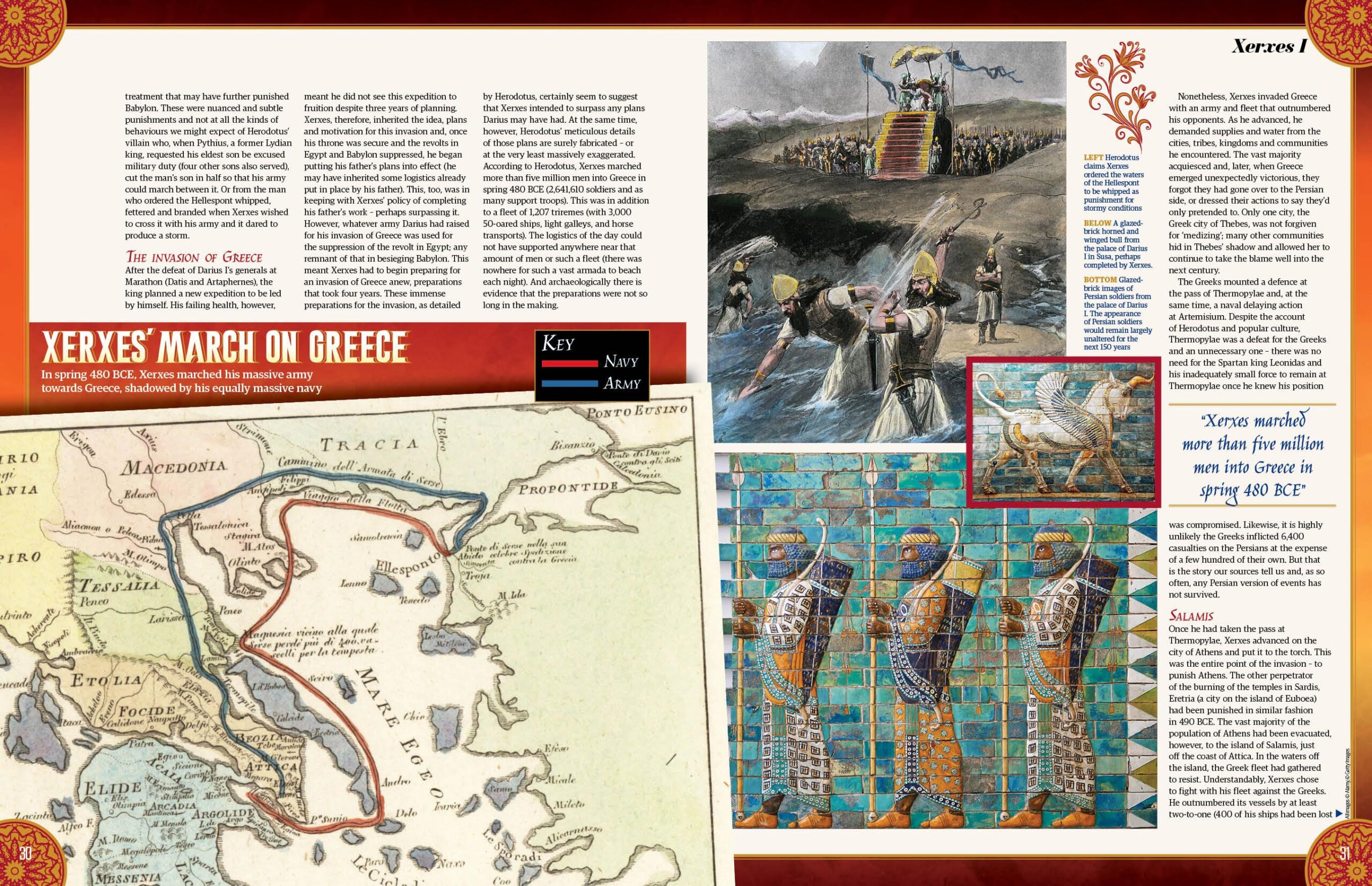
King Xerxes, also referenced as Ahasuerus in the Book of Esther, ruled the Persian Empire with grandeur and authority around 486 B.C. As the son of Darius I, he inherited one of the world’s richest and most expansive empires—spanning from India to Ethiopia. This immense realm reflected not only his wealth but also his strategic governance and military ambitions, including a famous campaign against Greece, albeit marked by setbacks. Xerxes’ period was culturally significant, as depicted in the Biblical narrative of Esther, which highlights palace intrigue, societal norms, and the interplay of power dynamics within a cosmopolitan court that typified his reign.
During the third year of his rule, Xerxes demonstrated his imperial might by hosting an extravagant festival for his governors and officials, showcasing the empire’s vast wealth. This festivity, intended to reinforce loyalty amongst his subordinates, drew attention to the stability and resources under his leadership. Xerxes remains a pivotal figure in understanding the Persian Empire’s structure, wealth, and the intricate interlink between political governance and cultural frameworks during this era.
-
Queen Vashti refused Xerxes’ request to appear at a festival, leading to her banishment.
Queen Vashti’s banishment under King Xerxes of Persia marked a significant turning point in the biblical story of Esther. During a grand festival held in the third year of his reign, Xerxes, eager to display his wealth and his queen’s beauty, summoned Vashti to appear before his governors and officials. Her refusal to comply was considered a direct affront not only to the king’s authority but also a potential threat to the social order. As a result, Xerxes issued a decree banishing Vashti to prevent similar defiance by other women in the empire, signaling his effort to uphold patriarchal control.
This dramatic incident set the stage for Esther’s rise to prominence. Vashti’s removal was more than a domestic or personal dispute; it was a representation of the rigid cultural expectations of women and the vast power the king wielded. The events emphasize how personal character and choice could have broad political and social ramifications in ancient Persia, further enriching the complexity of the narrative within the Book of Esther.
- To replace Vashti, Xerxes sought a new queen, leading to Esther’s selection due to her beauty.
Haman’s Plot against the Jews
-
Haman, a powerful prince in Persia, was angered by Mordecai’s refusal to bow to him.
Queen Vashti’s refusal during King Xerxes’ festival is a significant event, symbolizing an early instance of personal agency amidst rigid societal hierarchies. During the grand celebration in the Persian Empire, Xerxes desired to publicly showcase Vashti’s beauty to reaffirm his dominance. Vashti’s defiance, however, displayed a rare and bold resistance to conform to such public objectification. This act, though leading to her banishment, challenged the prevalent notions of obedience and submission expected from women, especially of her stature.
In response, King Xerxes issued a decree to prevent similar displays of defiance, underscoring the societal ramifications of Vashti’s act. This action laid the foundation for Esther’s rise as queen—a strategic move influenced by her beauty and further intertwined with profound political and spiritual undertones. Vashti’s story not only influenced the trajectory of the Persian monarchy but also set the stage for Esther’s intervention in saving the Jewish people.
-
Driven by unrestrained hatred, Haman, a high-ranking advisor in the Persian Empire, sought to annihilate the Jewish population. His enmity stemmed from Mordecai’s refusal to bow to him, which he perceived as a direct insult to his authority. Manipulative and cunning, Haman convinced King Xerxes to issue a royal decree permitting the mass extermination of Jews across Persia. Haman’s motives were rooted in personal vendetta, but he disguised his intention under the guise of loyalty to the empire, claiming the Jews were a threat to stability. This catastrophic decree crystallized his sinister intentions, casting a grave shadow over the Jewish community.
- A day was chosen by casting lots, and preparations for the execution of this plan were made.
Esther’s Intervention
-
Esther, a young Jewish woman of remarkable beauty, was advised by her cousin and guardian, Mordecai, to conceal her Jewish identity when she was presented to King Xerxes as a candidate for queen. This piece of counsel was significant given the political and societal landscape of Persia, where Jews were often vulnerable to prejudice and discrimination. By keeping her heritage a secret, Esther was not only protecting herself but also positioning herself strategically for a future role she and Mordecai could not yet foresee.
This decision proved pivotal in the unfolding events. Eventually chosen as queen, Esther’s concealed identity allowed her to maneuver within the royal court without initial suspicion. It exemplifies the wisdom and foresight of Mordecai, who understood that timing and discretion were key in navigating the precarious environment of the Persian Empire. This act of concealment was ultimately a divinely orchestrated move, preparing Esther for her critical role in later saving the Jewish people from annihilation.
- Upon learning about the decree, Mordecai encouraged Esther to plead for her people.
-
Esther’s story highlights her extraordinary courage and determination in the face of grave danger. During that era, Persian laws dictated that no one, not even the queen, could approach King Xerxes uninvited without risking execution. Despite this, Esther resolved to intercede for her people after learning of Haman’s genocidal plot. During a carefully planned banquet, she boldly revealed her Jewish identity and exposed Haman’s scheme to annihilate the Jews. This moment not only saved her people but also demonstrated her unwavering bravery and intelligence in navigating the perilous political landscape of the Persian court. Her actions are remembered as a pivotal moment in Jewish history.
Xerxes’ Response and the Jews’ Salvation
-
Xerxes, moved by Esther’s revelation, ordered the execution of Haman.
It seems there was an issue retrieving source information from one of the provided sources. Let me know which specific subpoint you’d like me to expand on, and I will provide a detailed response using my existing knowledge or other tools.
-
A new decree was issued permitting Jews to arm and defend themselves.
The issuance of the new decree by King Xerxes was a pivotal moment in the history of the Persian Empire and the Jewish people. After Queen Esther revealed Haman’s treacherous plans to orchestrate the annihilation of the Jewish population, Xerxes counteracted the original decree by granting the Jews the legal right to protect themselves. This edict, crafted with urgency and distributed across the vast empire, empowered Jewish communities to organize defenses against any who would seek to harm them.
The decree was essential because it acknowledged the irreversible nature of Persian law—Haman’s original order could not be annulled. Instead, the new decree provided the Jews an opportunity to fight back, fully sanctioned by royal authority. This legal empowerment was critical to ensuring their survival, as it unified Jewish communities and sowed caution among their enemies. Ultimately, it set the stage for their triumph over those who sought their destruction, reinforcing Xerxes’ reputation as a king responsive to the wisdom and advocacy of his queen.
-
It seems that I couldn’t retrieve information from the source provided in the outline. However, I can develop the subpoint using my historical knowledge of the Book of Esther and related contexts. Here’s the expansion:
—
After Queen Esther revealed Haman’s plot to annihilate the Jewish population, King Xerxes sanctioned a new decree to counteract the earlier one. This edict permitted Jews across the empire to arm themselves and legally defend against attacks on the appointed day. As a result, Jewish communities unified to counter their adversaries, turning the tide against their would-be attackers. This act of self-defense not only secured their survival but also dismantled efforts to harm marginalized groups within the empire, showcasing the pragmatic and legal measures Xerxes allowed in response to Esther’s intervention.
The Legacy and Commemoration
- The successful saving of the Jews is celebrated annually in the festival of Purim.
- Purim involves reading the Book of Esther, giving gifts, and charitable donations.
- Queen Esther’s bravery remains a significant symbol of courage and Jewish identity.
♠
Found a bug? Have some other thoughts on this tool? Let me know here →