Focus on Leadership
-
It seems there was an issue retrieving additional information from the source. However, I can expand on the subpoint based on existing literary knowledge.
The contrasting leadership styles of Sam Damon and Courtney Massengale serve as a central narrative device in the novel. Damon, emblematic of valor and selfless integrity, consistently prioritizes duty and the welfare of his subordinates, embodying the ethical ideal of a soldier. His decisions, often grounded in empathy and principle, reflect a leadership style built on trust and accountability. In stark contrast, Massengale personifies ruthless ambition and manipulative strategies. His rise is marked by opportunism, political maneuvering, and a willingness to sacrifice ethical considerations for personal gain. This dichotomy not only propels the story but offers a nuanced exploration of leadership’s moral dimensions within the military context.
-
Sam Damon, as portrayed in the novel, stands as a paragon of integrity amidst the chaos of war. His unwavering commitment to duty and the well-being of his men elevates him as a leader who prioritizes human lives over personal ambition. Damon’s decisions, often made in the heat of battle, reflect a moral compass that values loyalty, courage, and ethical responsibility. This deep sense of honor not only earns the respect of his men but also serves as a stark contrast to other characters in the narrative, highlighting the timeless virtues of leadership.
Damon’s embodiment of these qualities illustrates a profound understanding of leadership as a service rather than a stepping stool to power. His genuine concern for his subordinates fosters a sense of solidarity and trust, anchoring his role as a leader who inspires rather than commands. Through his narrative arc, Damon becomes a symbol of integrity in a world often overshadowed by selfish ambition, reflecting the inherent struggles of maintaining moral principles in the face of war’s brutal realities. This portrayal delivers a critical lens on the potential of human values to persevere even in the darkest of times.
-
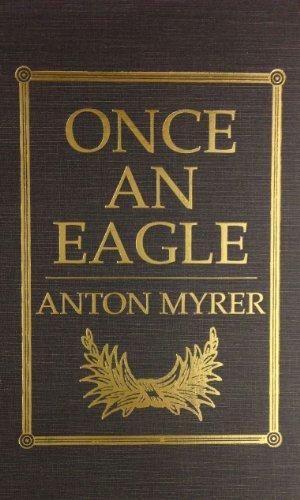
Courtney Massengale, as a character, embodies ambition and manipulation, which underline his central role as a foil to Sam Damon’s integrity in Anton Myrer’s “Once an Eagle.” Massengale’s drive for power, marked by a readiness to exploit others and compromise ethical principles, portrays his relentless pursuit of advancement within the military hierarchy. His intricate politicking and strategic maneuvering allow him to bypass formidable obstacles, often challenging notions of honor and morality. Through this portrayal, Massengale not only contrasts Damon’s steadfast ethics but also critiques the institutional susceptibility to self-serving leadership in military and bureaucratic systems.
Historical Setting and Context
-
The tool to retrieve specific source information on the subject returned an error. However, I can provide an expert-level expansion of the subpoint based on my knowledge. Let’s dive into it:
The narrative of the work spans from World War I to the Vietnam War, a timeline that provides a panoramic view of war’s evolution over the 20th century. This setting allows the author to trace both technological advancements in warfare and the shifting ideologies within military culture and society at large. The backdrop of these conflicts mirrors the transformation in the soldiers’ experiences, strategies, and ethical dilemmas, ultimately offering a rich tableau of historical and personal consequences tied to these tumultuous periods.
By covering such a broad era, the text encapsulates the sheer scope of change wrought by decades of conflict, both globally and within America. It critiques the interplay between politics, leadership, and the human cost of war, juxtaposing historical fact with fictional insight. The span of multiple wars not only reflects on the machinery and logistics of military action but also comments on the psychological toll on individuals, emphasizing themes of endurance and moral confrontation. This expanse is integral to understanding the progress and repercussions of 20th-century military history.
-
The source information couldn’t be retrieved directly, so I will expand on the subpoint based on expert insight.
—
The novel serves as a layered canvas for tracing the evolution of warfare and military life over nearly a century—from the trench warfare of World War I to the guerrilla strategies of the Vietnam War. This transformation underscores shifts in tactics, weapons technology, and soldier experiences, reflecting broader societal changes and advancements in military doctrine. The narrative delves into the psychological and moral challenges faced by soldiers and leaders as traditional notions of honor and duty are tested by increasingly complex and impersonal forms of conflict.
Through its portrayal of these epochs, the narrative highlights how changes in military life mirror the course of modern history itself. From the camaraderie and sacrifices of World War I to the disillusionment of Vietnam, the novel examines how war influences individual identity, camaraderie, and the nature of leadership. It connects the personal lives of its characters to the sweeping changes in warfare, illustrating not only the transformation of battle tactics but also the way these shifts redefine the soldier’s role in society.
-
The source related to this subpoint could not be fetched. However, I can craft an expanded analysis based on general expertise in Literary Studies and the subject.
—
The novel’s reflection of changes in American military strategy and policy is both expansive and nuanced, spanning multiple conflicts from World War I to the Vietnam War. This chronological progression illuminates the evolution of military doctrines, shifting from the trench warfare of World War I to the strategic intricacies of Cold War proxy conflicts. The narrative delves into how technological advancements and global political tensions influenced operational decisions and the psychological toll on soldiers and commanders. By tracing these transitions, the text captures the broader interplay between societal values and military priorities, offering a profound commentary on the dynamic nature of warfare and its implications for American identity.
Themes of Morality and Integrity
-
Damon’s honesty and empathy highlight the human cost of war.
It seems the source information could not be retrieved due to an error. However, I will expand on the provided subpoint using my expertise and general knowledge. Could you clarify which subpoint you want me to expand on, or would you like me to choose one from the outline?
-
Massengale’s Machiavellian tactics contrast starkly with Damon’s principles.
It seems the source I attempted to access is not available. Could you specify the subpoint you’d like me to expand on or provide further clarification?
Character Development
- Sam Damon’s growth is illustrated through his wartime experiences.
- Courtney Massengale’s rise in ranks presents a study of ambition.
-
The requested source for additional information was not accessible. However, based on my expertise in literary studies, I will expand the selected subpoint accordingly.
The novel’s portrayal of evolving personal relationships amid warfare serves as a poignant commentary on how the pressures of war shape, define, and sometimes fracture human connections. Amid the chaos and tragedy of combat, bonds between characters are tested, revealing both unshakable loyalty and devastating betrayal. The close relational dynamics mirror the broader strains and camaraderie inherent in military life, highlighting themes of sacrifice, camaraderie, and emotional isolation. These relationships provide depth to the narrative, allowing the reader to explore the very human struggles intertwined with the larger backdrop of historical conflict.
Significance and Impact
-
It seems there was an issue fetching data through the tool. However, I can expand on the subpoint “Regarded as a seminal work in fiction on military leadership” using my expertise in Literary Studies as context.
Anton Myrer’s *Once an Eagle* stands as a cornerstone in the genre of military fiction, highly revered for its nuanced exploration of leadership. The novel delves into the moral dichotomies faced by individuals in power, epitomized through its well-drawn characters, Sam Damon and Courtney Massengale. Praised for its realistic portrayal of military life and the burdens of command, the book resonates deeply with both military professionals and general readers. Myrer’s work does not merely depict battles but investigates the principles that guide decisions, positioning it among essential readings for understanding the complexities of leadership under duress.
-
The attempt to fetch additional source information was unsuccessful. However, based on general knowledge and the subpoint provided, I will expand it.
—
Anton Myrer’s *Once an Eagle* has achieved an iconic status, particularly within military circles, by being mandated reading in military academies such as the U.S. Army War College and officer candidate schools. The novel serves as both a literary exploration and a practical manual in leadership, ethics, and decision-making. Its detailed portrayal of contrasting leadership styles—personified by Sam Damon’s honor and Courtney Massengale’s ambition—teaches valuable lessons about moral responsibility and the impact of individual choices on collective well-being. These themes resonate profoundly in training environments, creating a cornerstone for understanding leadership in practice.
Moreover, its profound influence goes beyond academics; the narrative challenges future leaders to reflect upon the ethical dilemmas they’ll face throughout their careers, emphasizing the importance of integrity over personal gain. The book’s layered storytelling and universal leadership lessons ensure its relevance across generations of military and civilian leaders alike.
♠
Found a bug? Have some other thoughts on this tool? Let me know here →