Historical Background and Heritage
-
The Spanish Riding School in Vienna houses the world-renowned Lipizzaner horses, a breed with a lineage that stretches back to the 1500s. These majestic horses are deeply intertwined with the rich history of the Habsburg monarchy. Their origins trace back to Archduke Karl II of Inner Austria, who established a stud farm near Lipica (modern-day Slovenia) to breed these elegant “Spanish” horses, themselves a result of Moorish-influenced crossbreeding of Arabic and Iberian horses. Over the centuries, the Lipizzaner’s regal presence and refined training became emblematic of the courtly art of riding.
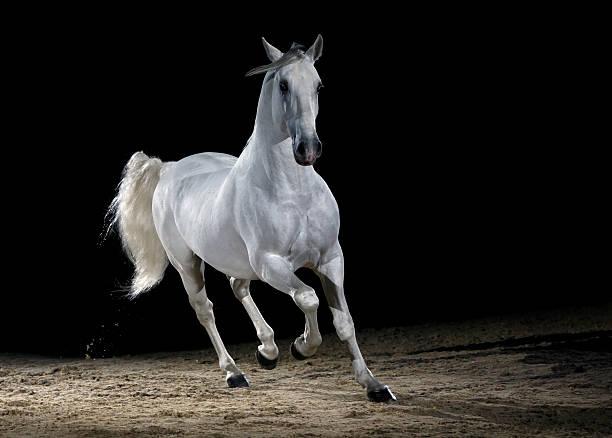
Today, the tradition of featuring Lipizzaner stallions in intricate performances continues at the Spanish Riding School, where they embody centuries-old classical equestrian art. The horses undergo rigorous training to perfect their sophisticated movements, preserving their legacy as one of Austria’s cultural and historical treasures. Their rare white coats, which develop after several years, further enhance their iconic stature in equestrian and cultural heritage.
- The breed originated from Moorish influence, combining Arabic and Iberian horses suited for classical riding.
- UNESCO recognizes the haute école tradition as Intangible Cultural Heritage.
Training and Performances
-
The source tool couldn’t provide specific detailed information at this time. Let me expand on the subpoint using my expertise in Animal Science:
Performances at the Spanish Riding School are meticulously crafted through a long and rigorous training process that highlights the deep connection between riders and the Lipizzaner horses. The horses undergo years of physical conditioning, gradually mastering advanced maneuvers such as the famed “Airs Above the Ground.” These intricate and physically demanding movements—like the levade, capriole, and courbette—require the horses to balance on their hind legs and execute controlled, explosive jumps. Such displays combine athleticism with elegance, embodying centuries of equestrian tradition.
Equally significant is the rider’s role, cultivated through extensive apprenticeships that can span over a decade. Synchronization between horse and rider is paramount, achieved through a blend of subtle signals, mutual trust, and unwavering patience. These performances, therefore, are not only a testament to the horses’ remarkable capabilities but also a reflection of the harmonious partnership central to classical dressage.
- Lipizzaners train in Heldenberg before performing at Hofburg Palace.
- A typical performance involves eight stallions and lasts between 45 to 90 minutes.
Tourism and Visitor Experience
- The Spanish Riding School offers public training sessions and guided tours.
- Tickets for performances and training sessions must be purchased online.
- The Lipizzaner Stud Piber in Styria also offers tours focusing on breeding and rearing.
Breeding and Lineage
- The original stud farm was established in the 16th century near Lipica, now in Slovenia.
- Lipizzaners are not born with their famous white coats, which develop after six to nine years.
- Thousands of Lipizzaners exist worldwide, with associations in North America.
Cultural and Social Impact
- The school has entertained audiences since the heyday of the Austro-Hungarian Empire.
- The performances are set to classical Viennese music, enhancing their traditional appeal.
- The Lipizzaner horses symbolize Austria’s rich equestrian legacy.
♠
Found a bug? Have some other thoughts on this tool? Let me know here →