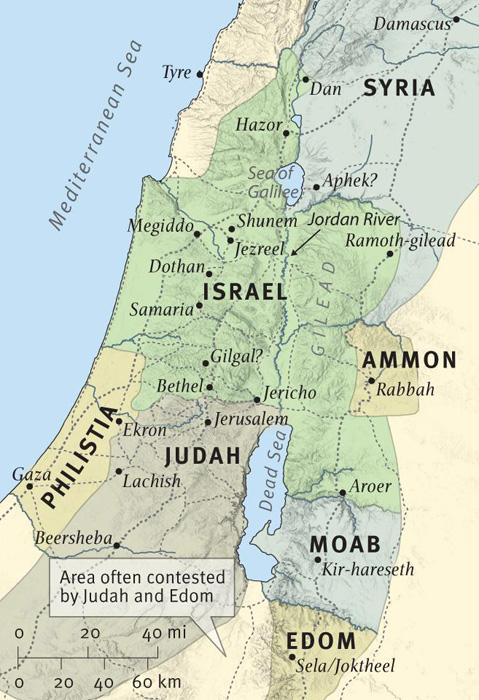
Historical Background
- The term ‘Israelites’ refers to the descendants of Jacob, later named Israel, forming the nation originally comprising 12 tribes.
- After King Solomon’s death, the original Israelite kingdom divided into two: Israel in the north and Judah in the south.
- Israel was composed of ten tribes, while Judah was composed of the tribes of Judah and Benjamin, with Jerusalem as its capital.
- The term ‘Jews’ originated from the inhabitants of Judah and extended to all Israelites after the Babylonian exile.
Religious and Ethnic Identity
- Today, ‘Jews’ denotes religious and ethnic identity for those following Judaism.
- During the Babylonian Exile, Judaism expanded as the national religion of the Judahites.
-
Following the Babylonian Exile, the term “Jews” began to eclipse other identifications for the Israelites, primarily due to the dominant role played by the Judahite population. While both the Northern Kingdom (Israel) and the Southern Kingdom (Judah) had been significant in biblical history, the Assyrian conquest dispersed the ten northern tribes, leaving Judah as the central remaining entity. Over time, with the Judahite exiles returning from Babylon and their cultural and religious identity solidifying around the worship practices centered in Jerusalem, the term “Jew” came to represent the descendants of Judah as a whole.
The evolution of this identity marked a transition from tribal affiliation to a more inclusive term that unified those who adhered to Judaism, particularly after the Babylonian Exile. By the late biblical period, “Jew” was used to describe followers of the Judahite religion and ethnicity collectively. It is this definition of “Jew” as both a religious and ethnic marker that predominantly characterizes their descendants and shapes Jewish identity today. This shift was pivotal, allowing for the cohesion of a dispersed people and the preservation of Jewish identity across centuries and geographic boundaries.
Biblical Use
-
The terms “Hebrews,” “Israelites,” and “Jews” are often interchanged in religious texts, but each term holds distinct significance tied to ancestry or historical identity. “Hebrews” connects directly to Abraham, often emphasizing the lineage’s ancient origins and their transitions, such as crossing the Euphrates River from Ur. “Israelites” refers to descendants of Jacob, later renamed Israel, aligning them with their tribal beginnings. “Jews,” a term emerging during the period of Judah’s dominance, signified the inhabitants of the southern kingdom and was later extended to all Israelites post-Babylonian exile. Collectively, these terms form layers of identity shaped by genealogy, territorial roots, and religious traditions.
- Israelites emphasize descent from Jacob, while Jews emphasize the homeland of Judah.
- The Bible uses a collective term, leading to widespread confusion between Jews and Israelites today.
Modern Implications
- It is common to confuse Jews with Israelites today as almost all Jews live in Israel.
-
Jews today are largely connected to the ancient Judahites from the southern kingdom of Judah, both through religious practices and ethnic heritage. This identity emerged strongly during and after the Babylonian Exile. By the 7th century BCE, Judaism had begun to take form as a national religion under Judahite kings and religious leaders. During the exile, this faith solidified, distinguishing Judahites as adherents of what we now recognize as Judaism.
After returning from Babylon, these southern tribes became collectively known as “Jews.” Historically, they retained a centralized focus on Jerusalem, the capital of Judah, and established religious traditions that continue to define Jewish identity. This heritage is evident not only in modern religious observances but also in the cultural and historical legacy of the Jewish people.
- The term ‘Israelites’ is mainly used in historical or biblical contexts rather than contemporary discussions.
♠
Found a bug? Have some other thoughts on this tool? Let me know here →
![Protoparmeliopsis muralis, lichen crustacé saxicole couvrant de nombreux substrats artificiels[g].](https://ericknaus.com/wp-content/uploads/2026/02/Lecanora_muralis_-_Flickr_-_pellaea_1-150x150.jpg)